
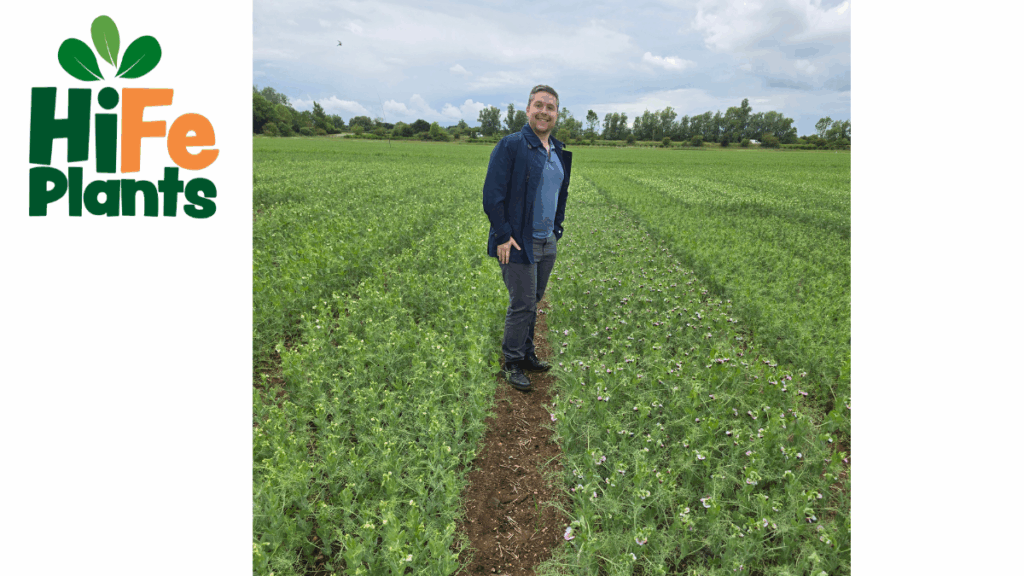
A new venture emerging from research at the John Innes Centre is working to address one of the world’s most widespread nutritional challenges: iron deficiency.
HiFe Plants, founded by Dr Jacob Pullin, is developing crops with significantly higher levels of bioavailable iron, with the aim of improving diets through everyday foods.
Dr Pullin has been working in Professor Janneke Balk’s group since 2021, building on earlier research that identified a plant trait capable of dramatically increasing iron accumulation in pea plants. This work centred on a gene known as BRUTUS, a key iron sensor in plants which plays an important role in regulating how plants take up and store iron.
While the genetic basis of the trait had been identified, understanding how it functioned at a biochemical level required further investigation. Drawing on his background in iron-related proteins, Dr Pullin helped to advance this understanding and, in doing so, recognised the potential for the research to move beyond the laboratory.
Iron deficiency remains the most common micronutrient deficiency worldwide. Even in Europe, around one in three women of reproductive age do not get enough iron in their diet. Although supplements are widely prescribed, they are often poorly tolerated and can cause unwanted side effects.
Increasing iron levels in plant-based foods has also proven challenging. Plants naturally regulate how much iron they absorb, and compounds such as phytates can limit how much of that iron is available to the body.
HiFe Plants aims to address both of these challenges. The technology enables plants to store iron in ferritin, a naturally occurring protein that safely holds iron and is more readily absorbed in the human gut. The initial focus is on developing plant-based iron ingredients derived from high-iron pea crops, with longer-term ambitions to extend this approach to a wider range of foods.
Support from the John Innes Foundation is helping to move this work from research towards real-world application. One of the immediate priorities is to transfer the high-iron trait into modern, high-performing crop varieties. While the original discovery was made in an older pea line, long-term success depends on combining the trait with strong yield, resilience and disease resistance.
The funding is also helping the team address practical next steps, including regulatory planning and exploring other promising high-iron traits. Crucially, this support enables the research to continue without delay, maintaining momentum as the project moves closer to applications that could benefit people’s health.
Looking ahead, the ambition for HiFe Plants is to make it easier for people to maintain healthy iron levels through the foods they already eat. This could include developing high-iron versions of widely used ingredients, helping to improve nutritional outcomes without requiring changes in dietary habits.
There is also longer-term potential to apply this approach to crops grown in regions where iron deficiency is most prevalent, contributing to improved nutrition at a global scale.
Reflecting on the support, Dr Pullin said:
“I’m incredibly proud that the John Innes Foundation has placed its trust in HiFe Plants’ vision. This funding feels like a significant milestone, marking the project’s shift from academic research to a real-world application that could genuinely help people.”